
Cabinet and Tunnel Washers
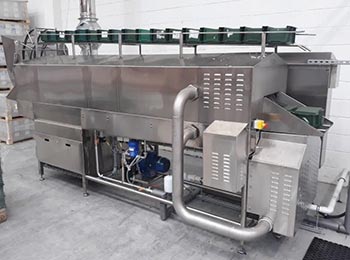
High-Throughput Industrial Washing Systems for Food & Beverage Operations
When food and beverage processors require consistent, high-throughput sanitation of containers, trays, tools, and other reusable items, selecting the right washing system is critical. Cabinet washers and tunnel washers provide automated, efficient cleaning that reduces labor, improves hygiene, and supports regulatory compliance.
Sanicore Systems offers dependable industrial washing machine solutions in both cabinet and tunnel configurations. These systems are engineered to handle everything from light residues to heavy soils across a wide range of equipment types, helping operations maintain clean, sanitized equipment while maximizing productivity.
Key Advantages of Cabinet and Tunnel Washers
- Automated, repeatable cleaning for consistent sanitation results
- Cabinet and tunnel configurations to match batch or continuous operations
- Designed for food and beverage production environments
- Reduces manual labor and operator fatigue
- Supports USDA, FDA, and HACCP sanitation requirements
- Built for long-term durability and daily industrial use
Important Considerations When Choosing Cabinet and Tunnel Washers
When evaluating washing systems for your facility, it’s important to assess your workflow, cleaning requirements, and space constraints. Key considerations include:
- Type and Volume of Items to Be Cleaned
Cabinet washers are well-suited for batch loads and varied equipment, while tunnel washers are ideal for continuous, high-volume sanitation. - Size and Configuration
Ensure the washing system can accommodate your equipment dimensions, load sizes, and container types. - Level of Soiling
Look for systems with customizable wash cycles, high-pressure spray jets, and adjustable temperature controls to handle light residue through heavy soils. - Available Floor Space and Layout
Tunnel washers require linear installation space, while cabinet washers offer a more compact footprint for facilities with limited room. - Energy and Water Efficiency
Choose systems with built-in filtration, recirculation, and programmable cycles to reduce operating costs. - Sanitation Standards
Equipment should meet applicable food safety regulations, including USDA, FDA, and HACCP guidelines. - Loading and Unloading Process
Automated handling or ergonomic loading options can improve safety and reduce operator fatigue. - Maintenance and Access
Easy-to-clean designs and accessible service panels help reduce downtime and simplify maintenance.
Click on a gallery photo to enlarge
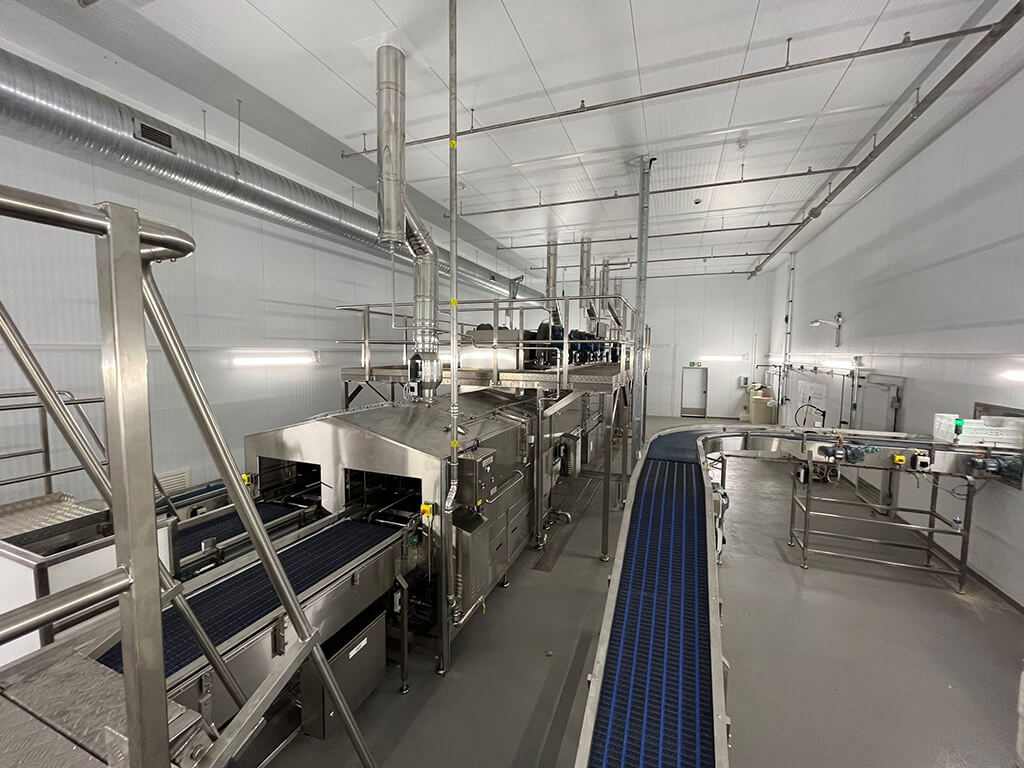
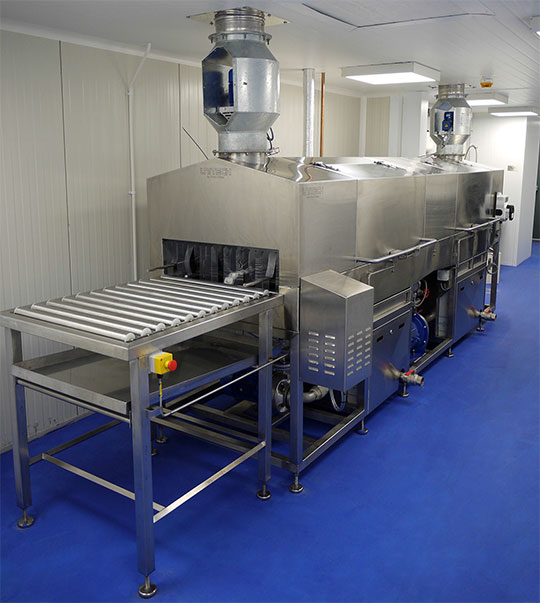
Cabinet and Tunnel Washer Applications
Cabinet washers and tunnel washers are commonly used across a wide range of food and beverage processing environments. Their flexibility and cleaning power make them suitable for:
- Meat and poultry facilities washing bins, buggies, knives, and production tools
- Bakeries cleaning baking trays, racks, pans, and ingredient containers
- Dairies sanitizing molds, cheese hoops, and packaging tools
- Seafood processors washing insulated containers, scoops, and cutting boards
- Ready-meal and packaging plants cleaning weighing pans, trays, and utensils between shifts
- Any facility requiring consistent sanitation of reusable items throughout the production cycle
Whether cleaning small batches or running continuous sanitation cycles, these systems deliver time-saving performance with high levels of cleanliness.
Cabinet Washers vs. Tunnel Washers: Key Differences
- Cabinet Washers
- Batch-style operation
- Ideal for flexible production runs and varied equipment
- Compact footprint
- Tunnel Washers
- Continuous operation using conveyors
- Designed for high-volume, high-throughput applications
- Best suited for consistent production workflows
Sanicore Systems helps evaluate which configuration best aligns with your production demands and facility layout.
Frequently Asked Questions
What’s the difference between a cabinet washer and a tunnel washer?
A cabinet washer is a batch-style industrial washing machine that cleans items in a closed chamber, while a tunnel washer enables continuous washing as items move through the system on a conveyor.
Which option is better for high-volume operations?
Tunnel washers are typically better for high-throughput environments due to their continuous operation, while cabinet washers are ideal for smaller batches or flexible production schedules.
Can these washers handle different equipment types?
Yes. Both cabinet and tunnel washers are designed with flexible configurations to clean trays, bins, utensils, pans, and other reusable food processing equipment.
Are cabinet and tunnel washers energy efficient?
Many systems include water recirculation, heat recovery, and programmable cycles to optimize efficiency without compromising cleaning performance.