
Industrial Sinks
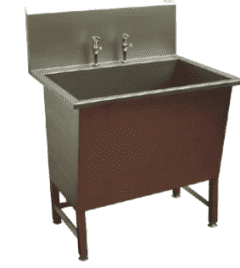
Durable Sanitation Stations for Food & Beverage Operations
Clean hands, tools, and work areas are essential in food and beverage production environments. Properly designed industrial sinks support sanitation protocols by providing reliable access to handwashing, tool cleaning, and equipment rinsing at critical points throughout a facility.
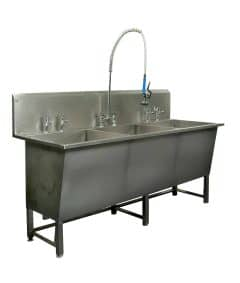
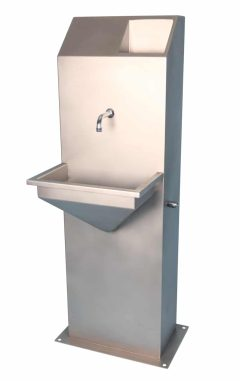
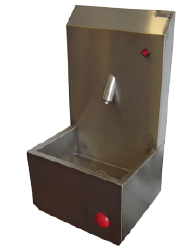
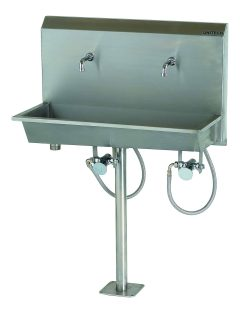
Sanicore Systems offers a wide range of durable, hygienic industrial sinks designed for use in food processing, abattoirs, commercial kitchens, and other high-care production environments. From hands-free heater sinks to Belfast sinks, abattoir sinks with sterilizers, and multi-user configurations, our industrial sink solutions are built to support hygiene, efficiency, and regulatory compliance.
Key Advantages of Industrial Sinks
- Supports hand hygiene, tool sanitation, and workstation cleanliness
- Designed for demanding food and beverage processing environments
- Available in hands-free, knee-operated, and multi-user configurations
- Durable stainless-steel construction for washdown conditions
- Helps reduce contamination risk through proper sink placement and design
- Supports FDA, USDA, and HACCP sanitation requirements
Click on a gallery photo to enlarge
Important Considerations When Selecting Industrial Sinks
Choosing the right industrial sink setup requires thoughtful planning based on workflow, sanitation protocols, and available space. Key factors to consider include:
- Number of users and peak usage times throughout the shift
- Hands-free operation requirements to reduce cross-contamination
- Application-specific features such as knife sterilizers for meat processing areas
- Sink depth, size, and splash control to support various cleaning tasks
- Durability and construction materials suitable for heavy daily use
- Mounting style and configuration, including freestanding or wall-mounted options
- Compliance with food safety and hygiene regulations
- Hot water availability, temperature control, and integration with sanitation systems
Addressing these considerations helps ensure industrial sinks support both sanitation compliance and efficient operations.
Industrial Sink Applications
Industrial sinks are used across a wide range of food and beverage processing environments. Common applications include:
- Food preparation areas using deep Belfast sinks for washing produce, utensils, and containers
- Meat processing plants requiring abattoir sinks with sterilizers for knives and hand tools
- Bakery and confectionery facilities using hands-free sinks for frequent handwashing
- Dairy operations utilizing knee-operated sinks to support hygienic rinsing during processing
- Employee hygiene stations where multi-user sinks support high-traffic sanitation zones
- Commercial kitchens and catering facilities requiring durable sinks for continuous cleaning
With the right combination of design and functionality, industrial sinks help reduce contamination risk and support consistent hygiene standards throughout the facility.
Frequently Asked Questions
What is a Belfast sink and where is it typically used?
A Belfast sink is a deep, wide sink traditionally made from ceramic or stainless steel. It is commonly used for high-volume washing tasks in food preparation and processing areas.
Why choose a heater sink with knee-operated controls?
Knee-operated heater sinks allow hands-free activation, helping reduce the spread of bacteria while ensuring warm water is always available for effective handwashing.
What makes an abattoir sink with sterilizer different from a standard sink?
Abattoir sinks with sterilizers are designed for meat processing environments and include built-in systems to sterilize knives and tools between uses.
How many users can a hexagonal multi-user sink support?
Hexagonal multi-user sinks are designed to support multiple users simultaneously, making them ideal for high-traffic hygiene zones such as production floor entry points.
Are industrial sinks easy to maintain?
Yes. Industrial sinks are built from corrosion-resistant materials and designed for easy cleaning and long-term performance in demanding environments.