
Sanitizing and Sterilizing Equipment
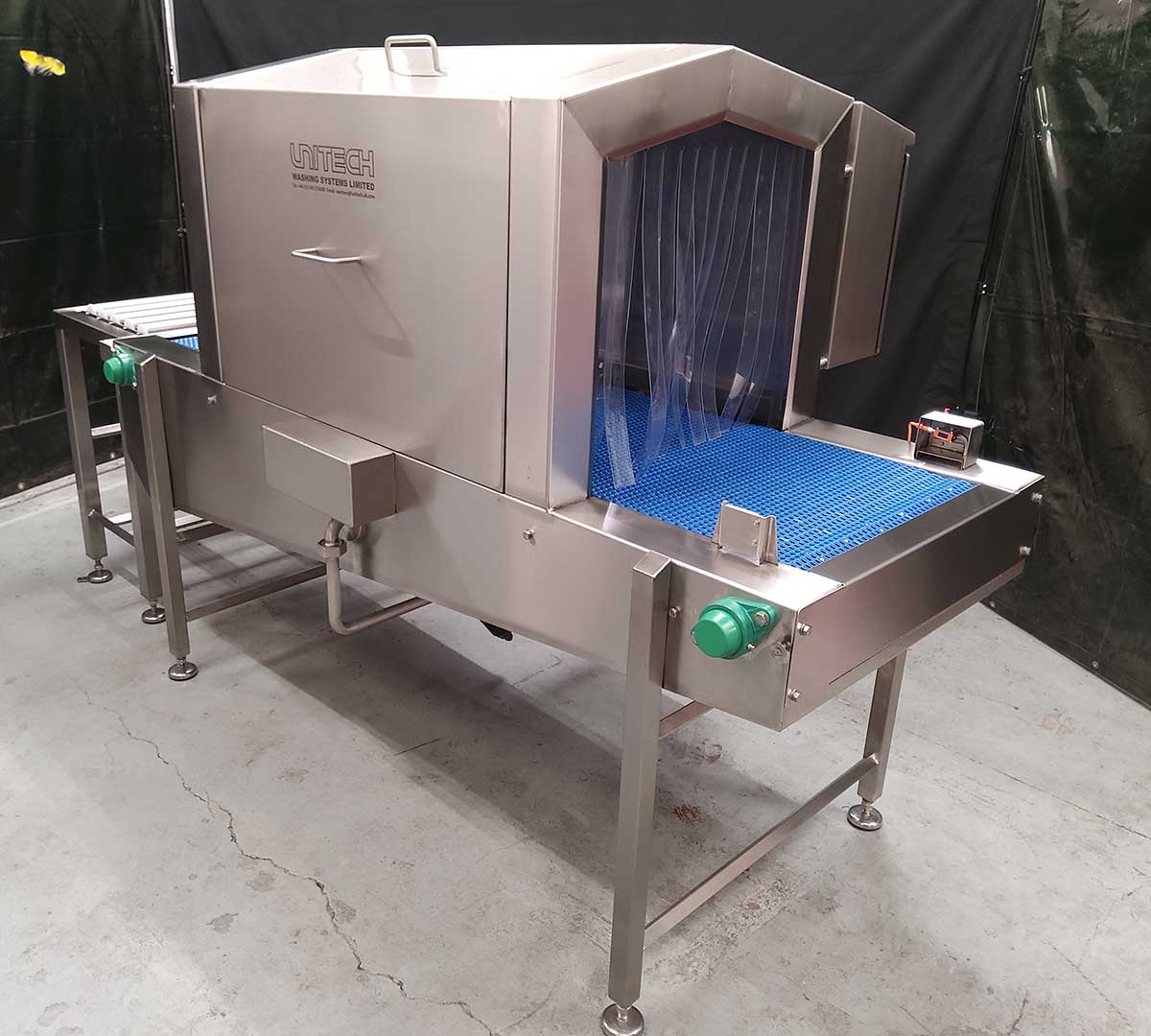
Reliable Hygiene Control for Food Safety, Compliance, and Operational Confidence
Preventing contamination is a top priority in food and beverage processing environments. Tools, equipment, and personnel must be properly sanitized and sterilized to protect product integrity and meet strict food safety standards. Whether sanitizing knives, sterilizing saws, or controlling hygiene at employee entry points, specialized equipment plays a critical role in reducing the risk of harmful bacteria and cross-contamination.
Sanicore Systems provides effective sanitizing and sterilizing equipment designed to support consistent hygiene protocols across your facility. From sanitizing tunnels to knife sterilizers, chest sterilizers, and saw sterilizers, we help food processors maintain compliance while improving efficiency and ease of use.
Key Advantages of Sanitizing and Sterilizing Equipment
- Reduces the risk of bacterial growth and cross-contamination
- Supports compliance with USDA, FDA, and HACCP-aligned sanitation standards
- Improves consistency in hygiene practices across shifts and departments
- Minimizes manual handling and operator variability
- Integrates easily into existing production workflows
- Designed for durability in washdown and food processing environments
Sanitizing and Sterilizing Equipment Applications
Sanitizing and sterilizing systems are used throughout food and beverage facilities where routine hygiene is essential to daily operations. Common applications include:
- Meat and poultry processing plants using knife and saw sterilizers during production and changeovers
- Employee entry points utilizing sanitizing tunnels for hand, boot, and equipment disinfection
- Commercial kitchens and protein handling areas using chest sterilizers for utensil storage
- Dairy and bakery facilities sanitizing racks, trays, and handling equipment
- High-risk processing zones where allergen or raw-to-cooked cross-contamination must be controlled
Integrating these systems into your sanitation workflow helps reduce contamination risks and maintain consistent food safety performance.
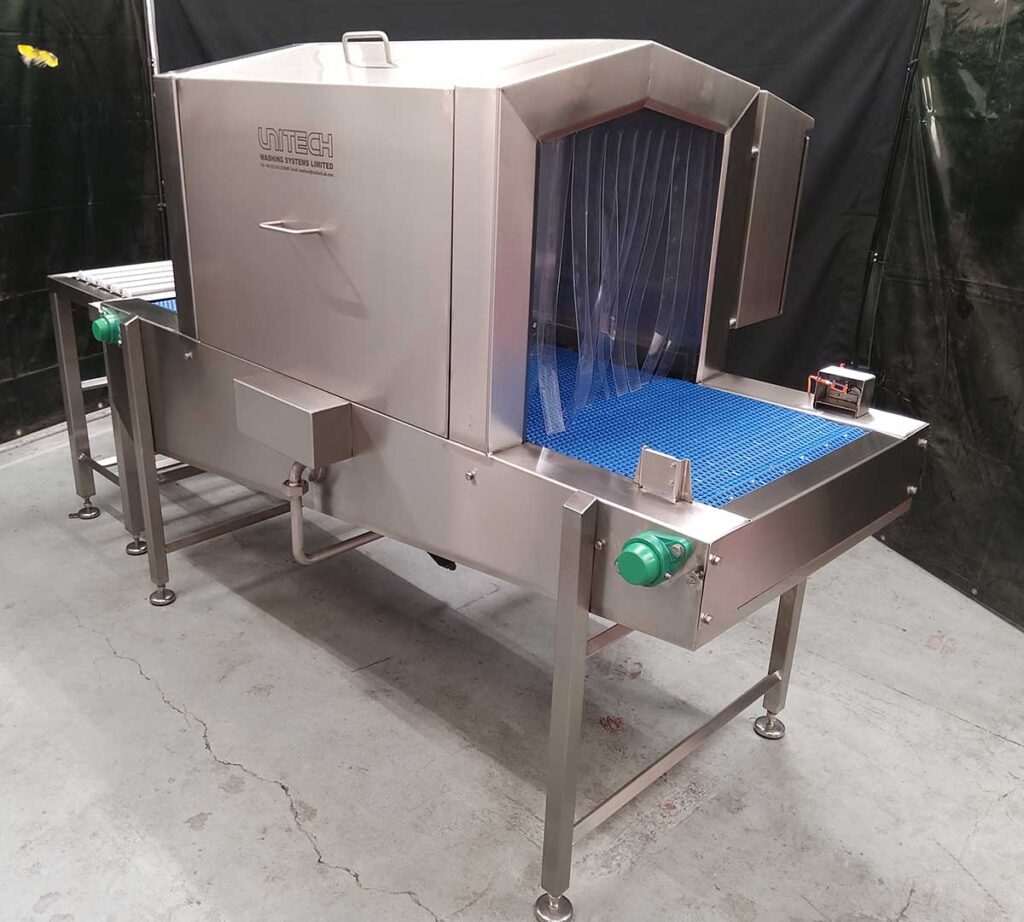
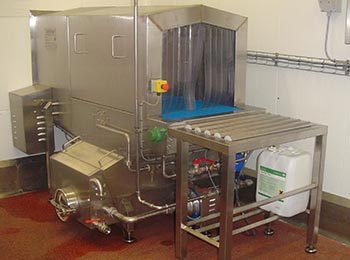
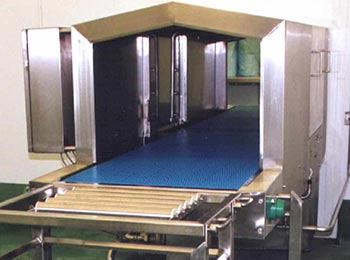
Click on a gallery photo to enlarge
Important Considerations When Purchasing Sanitizing and Sterilizing Equipment
Selecting the right sanitizing or sterilizing equipment starts with understanding your facility’s hygiene requirements. Key factors to evaluate include:
- Type of item or surface being sanitized, such as knives, saws, tools, equipment, or personnel
- Frequency of use and required throughput during production
- Target contaminants, including bacteria, viruses, allergens, or residues
- Temperature and contact time requirements for thermal sterilization
- Available floor space and layout for installation and workflow integration
- Regulatory compliance requirements from USDA, FDA, or GFSI-aligned standards
- Ease of operation and maintenance for sanitation and production teams
- Availability of utilities such as water, power, or chemical inputs
Frequently Asked Questions About Sanitizing and Sterilizing Equipment
What is a sanitizing tunnel and how does it work?
A sanitizing tunnel is an automated system designed to sanitize personnel or equipment as they pass through, typically using misting, chemical application, or UV light.
How hot do knife sterilizers operate?
Most knife sterilizers use heated water or steam and can reach temperatures between 180°F and 185°F, which is sufficient to eliminate most pathogens.
Are chest sterilizers used for active sterilization or storage?
Chest sterilizers are commonly used to maintain the sterility of knives and tools after cleaning, keeping them sanitized until ready for use.
How often should saw sterilizers be used in meat processing?
Saw sterilizers are typically used frequently throughout production, especially during product changeovers or when handling raw proteins.
Do these systems meet food safety regulations?
Yes. Sanitizing and sterilizing equipment supplied by Sanicore Systems is designed to meet applicable food safety regulations, including USDA, FDA, and HACCP-aligned requirements.