Key Takeaways
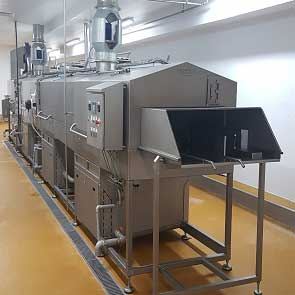
- Basket washers automate the cleaning of trays, racks, and baskets used in food processing environments
- Proper washing systems support FDA, USDA, and HACCP compliance
- High-performance washers reduce labor demands and unplanned downtime
- Filtration and recirculation systems lower water and utility consumption
- Configurable batch and continuous systems match different production volumes
- Modern basket washers improve sanitation consistency while protecting throughput
Why Food Processing Facilities Are Evaluating Automated Sanitation
Sanitation is one of the most critical and resource-intensive responsibilities in food processing operations. Equipment, containers, racks, trays, and other production components must be thoroughly cleaned and sanitized to maintain compliance with food safety regulations and internal quality standards.
Many facilities still rely heavily on manual cleaning methods such as pressure washing or hand scrubbing. While these approaches may appear inexpensive at first glance, they often carry hidden operational costs including:
- High labor requirements
- Inconsistent cleaning results
- Extended sanitation downtime
- Increased water and chemical consumption
- Greater risk of contamination or audit findings
As food manufacturers face tighter labor markets, stricter regulatory oversight, and pressure to maintain production efficiency, many operations leaders are exploring automated industrial washing systems as a long-term solution.
However, gaining approval for capital equipment typically requires a well-structured business case that demonstrates measurable value.
Identify the True Cost of Manual Sanitation
The first step in building a strong justification is understanding the full cost of the current sanitation process.
Manual cleaning often involves multiple employees performing repetitive tasks for extended periods of time. In addition to direct labor costs, manual processes can introduce variability that leads to rework or additional inspections.
When documenting the current state, it is helpful to quantify:
- Number of employees involved in sanitation
- Hours spent cleaning equipment, trays, or containers
- Production downtime associated with sanitation cycles
- Water and chemical usage during cleaning
- Injury risks associated with repetitive cleaning tasks
Many operations teams discover that sanitation represents a much larger operational expense than initially assumed.
Demonstrate Labor Savings and Workforce Efficiency
Labor reduction is often one of the most compelling elements of a sanitation automation proposal.
Automated washing systems allow facilities to clean large volumes of equipment using controlled wash cycles rather than manual labor. Instead of multiple employees scrubbing equipment, operators can load items into a system and allow the programmed wash cycle to perform the cleaning process.
Potential workforce benefits may include:
- Reduced staffing requirements during sanitation shifts
- Ability to redeploy workers to higher-value tasks
- Improved ergonomics and reduced injury risk
- More predictable sanitation schedules
In many cases, labor savings alone can account for a significant portion of the return on investment.
Highlight Improvements in Cleaning Consistency and Food Safety
Beyond cost savings, automated sanitation equipment delivers another critical benefit: consistency.
Manual cleaning methods can vary depending on employee technique, time constraints, or equipment accessibility. Automated systems standardize the sanitation process by controlling factors such as:
- Water temperature
- Wash pressure
- Chemical concentration
- Cycle duration
These controlled parameters help ensure repeatable cleaning results that support food safety programs and regulatory compliance.
Facilities working under FDA, USDA, and HACCP requirements often find that automated systems simplify documentation and audit readiness by providing consistent cleaning procedures.
Quantify Water and Chemical Savings
Many modern washing systems are designed to optimize resource usage.
Automated equipment can incorporate features such as recirculated wash water, controlled chemical dosing, and optimized spray patterns. These technologies allow plants to maintain effective cleaning while reducing overall resource consumption.
When building a business case, it is useful to compare:
- Current water consumption during manual cleaning
- Chemical usage and associated costs
- Wastewater treatment or disposal expenses
Reducing these inputs not only lowers operating costs but may also support corporate sustainability goals.
Show How Automation Reduces Production Downtime
In many food plants, sanitation activities create production bottlenecks. Equipment, trays, or containers must be cleaned before they can be returned to the production line.
Manual cleaning processes often struggle to keep up with production demands, particularly in high-throughput facilities.
Automated washing systems can help improve operational flow by:
- Cleaning large batches of equipment quickly
- Supporting continuous sanitation workflows
- Reducing delays between production cycles
Improved sanitation throughput allows production teams to maintain consistent operations without waiting for equipment to be cleaned manually.
Include Maintenance and Reliability Considerations
Operations leaders evaluating new sanitation equipment often want to understand long-term reliability and maintenance requirements.
Automated systems designed for food processing environments typically incorporate durable construction and serviceable components that support long operating life.
When evaluating equipment, decision makers may consider:
- Ease of maintenance and access to components
- Expected service intervals
- Availability of replacement parts
- Technical support and system integration
Reliable equipment helps ensure sanitation processes remain dependable without introducing additional operational complexity.
Present a Clear Return on Investment
To gain approval from financial stakeholders, the final step is summarizing the projected return on investment.
A simple ROI analysis may include:
- Labor savings
- Water and chemical reductions
- Increased production uptime
- Reduced sanitation rework
- Lower injury or safety costs
When these factors are combined, many facilities find that automated sanitation systems provide measurable financial returns while also improving operational performance.
How Sanicore Systems Supports Automated Sanitation
Facilities evaluating sanitation automation often look for equipment that can handle high volumes while maintaining strict hygiene standards.
Sanicore Systems designs and builds industrial washing equipment used in food and beverage processing environments. These systems are engineered to clean containers, baskets, trays, racks, and other production components using controlled wash cycles that deliver consistent sanitation performance.
Automated washing solutions can help facilities:
- Standardize sanitation procedures
- Increase cleaning throughput
- Reduce labor dependency
- Improve compliance with food safety standards
By integrating automated washing systems into sanitation workflows, many processors are able to strengthen hygiene programs while improving overall operational efficiency.
Work with the Automated Sanitation Equipment Experts
Building a business case for automated sanitation equipment requires more than simply comparing equipment prices. The most successful proposals demonstrate how automation improves efficiency, reduces risk, and supports long-term operational goals.
When operations leaders evaluate sanitation upgrades through the lens of labor savings, compliance performance, and production efficiency, automated washing systems often emerge as a strategic investment that supports both food safety and profitability.
Food processors exploring sanitation automation solutions can benefit from working with experienced equipment providers who understand the operational challenges of modern food production facilities. Sanicore Systems can help evaluate sanitation workflows and identify equipment solutions designed to support reliable, high-throughput cleaning operations. Contact us today.