Key Takeaways
- Basket washers automate the cleaning of trays, racks, and baskets used in food processing environments
- Proper washing systems support FDA, USDA, and HACCP compliance
- High-performance washers reduce labor demands and unplanned downtime
- Filtration and recirculation systems lower water and utility consumption
- Configurable batch and continuous systems match different production volumes
- Modern basket washers improve sanitation consistency while protecting throughput
Food processors depend on baskets, trays, and racks every day. These items move raw ingredients, finished products, and in-process materials across facilities. If they are not cleaned thoroughly and consistently, they can become a source of cross-contamination, product loss, and regulatory risk.
Basket washers are designed specifically to eliminate those risks while keeping operations efficient. When properly selected and integrated, they become a critical part of both hygiene control and uptime protection.
What Is a Basket Washer and How Does It Work?
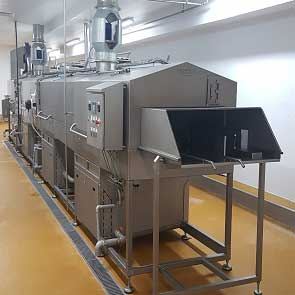
A basket washer is an industrial washing system engineered to clean reusable baskets, trays, and racks used in food and beverage production. These systems automate wash, rinse, and sanitize cycles using high-pressure spray nozzles, controlled temperatures, and chemical dosing where required.
Depending on the facility’s throughput and layout, basket washers may operate as:
- Batch-style systems for smaller or medium production volumes
- Continuous tunnel washers for high-volume, nonstop processing lines
- Rack washers for larger, multi-level loads
- Custom-engineered systems for specialty workflows
The goal is consistent, repeatable sanitation without relying on manual scrubbing or inconsistent cleaning procedures.
Why Basket Washers Are Essential for Food Safety Compliance
Food production facilities operate under strict regulatory frameworks. Compliance with FDA, USDA, and HACCP standards requires documented sanitation processes and reliable cleaning validation.
Basket washers help support compliance by:
- Delivering controlled wash temperatures and rinse cycles
- Removing fats, proteins, starches, and debris effectively
- Maintaining repeatable sanitation cycles across shifts
- Reducing human variability in cleaning procedures
- Supporting recordkeeping and standard operating procedures
When cleaning is automated and standardized, facilities reduce the likelihood of contamination events and audit findings.
Reducing Downtime Through Automated Cleaning
Downtime in food processing environments is expensive. Production interruptions caused by sanitation delays, insufficient cleaning, or failed inspections can quickly affect output and profitability.
Automated basket washers reduce downtime by:
- Shortening wash cycle times, often completing cycles in minutes
- Eliminating bottlenecks caused by manual washing
- Supporting continuous production flow in tunnel configurations
- Minimizing rework due to improperly cleaned equipment
- Reducing labor strain and absenteeism related to repetitive washing tasks
In high-throughput environments such as meat, dairy, bakery, beverage, and frozen food production, these time savings compound quickly.
Water Efficiency and Operating Cost Control
Modern basket washers are designed with efficiency in mind. Water use and energy consumption are important operational considerations, especially in facilities running multiple sanitation cycles per shift.
Advanced systems may include:
- Filtration systems that remove debris and extend wash water life
- Recirculation systems that reduce overall water consumption
- Heat recovery options to lower energy demand
- Smart controls that optimize wash parameters
By balancing sanitation performance with resource efficiency, processors can meet hygiene goals without escalating utility costs.
Applications Across Food and Beverage Processing
Basket washers play a role in nearly every segment of the food and beverage industry, including:
- Bakery production, cleaning dough trays and proofing baskets
- Meat and poultry processing, sanitizing transport baskets and storage racks
- Dairy operations, cleaning molds and draining racks
- Seafood processing, washing bins and baskets between cycles
- Beverage facilities, sanitizing racks used in handling and packaging
Regardless of the product, the objective remains the same: prevent cross-contamination and maintain uninterrupted production.
Integration and Configuration Options
Choosing the right basket washer depends on production volume, floor space, and process flow. Key considerations include:
- Size and material of baskets and trays
- Required throughput per hour
- Batch versus continuous operation
- Integration with conveyors or upstream equipment
- Ease of maintenance and service access
Facilities with shorter production runs may benefit from batch systems. High-volume plants often require continuous tunnel washers that integrate seamlessly into existing lines.
How Sanicore Systems Supports Basket and Tray Washing Performance
For food processors seeking durable and high-performance solutions, Sanicore Systems offers engineered basket and tray washing systems designed for demanding production environments.
Sanicore basket washers feature:
- Adjustable guides and spray configurations to accommodate multiple item sizes
- Stainless steel construction for hygienic durability
- Filtration and recirculation systems to support water efficiency
- Configurable batch and continuous options
- Engineering support for custom layouts and specialty applications
These systems are designed to help facilities maintain sanitation standards while supporting throughput and operational efficiency.
Improving Hygiene While Protecting Productivity
In food processing, sanitation and uptime are closely connected. Poor cleaning leads to contamination risk. Overly slow cleaning processes create production bottlenecks. The right basket washer solves both challenges at once. By automating wash cycles, improving water efficiency, and supporting regulatory compliance, basket washers become a strategic investment rather than just a sanitation tool.
If you are evaluating options for improving hygiene while reducing downtime in your facility, contact Sanicore Systems to discuss your basket and tray washing requirements. Our team can help you determine the right configuration to match your production needs.