Key Takeaways
- Integrating automated washing systems improves hygiene and consistency in food production
- Basket and tray washers can be retrofitted into existing lines with proper planning
- Key considerations include space, throughput, utilities, and material flow
- Automation reduces labor demands and minimizes production bottlenecks
- Sanitary design and compliance alignment are critical for food safety standards
- A well-integrated system enhances uptime, efficiency, and audit readiness
Why Integration Matters for Food Processing Operations
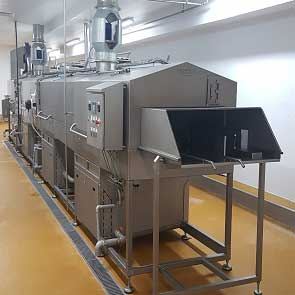
As food manufacturers face increasing pressure to meet strict hygiene standards while maintaining production efficiency, automated washing systems have become a necessity rather than a luxury. Basket washers and tray washers play a vital role in cleaning reusable items like totes, racks, pans, and containers that move throughout the production process.
However, many facilities operate with legacy layouts that were not originally designed for automation. Integrating a washer into an existing production line requires thoughtful planning to avoid disruption while maximizing long-term benefits.
When done correctly, integration transforms sanitation from a manual bottleneck into a streamlined, repeatable process that supports both compliance and productivity.
Evaluating Your Current Production Line
Before selecting or installing a basket washer or tray washer, it is essential to assess how materials currently flow through your facility.
Key evaluation points include:
- Entry and exit points for dirty and clean items
- Available floor space and layout constraints
- Current cleaning methods and labor requirements
- Production throughput and peak demand periods
- Existing utilities such as water, power, and drainage
Understanding these factors helps determine where a washing system can be placed without interrupting upstream or downstream processes.
Choosing the Right Integration Approach
Not all production lines require the same type of integration. The best approach depends on operational goals, space limitations, and production volume.
Inline Integration
Inline systems are built directly into the production flow. Dirty baskets or trays enter the washer automatically and exit clean, ready for immediate reuse.
Best for:
- High-volume operations
- Continuous production environments
- Facilities seeking maximum automation
Standalone or Batch Integration
Standalone systems operate independently from the main line. Items are loaded in batches and processed separately.
Best for:
- Facilities with limited space
- Lower throughput requirements
- Operations transitioning gradually to automation
Hybrid Integration
A hybrid approach combines elements of both, allowing flexibility while still improving efficiency.
Best for:
- Facilities with variable production schedules
- Operations needing phased automation upgrades
Key Design Considerations for Seamless Integration
Space and Footprint Planning
Even compact washers require sufficient clearance for loading, unloading, maintenance, and safe operation. Vertical space and access pathways should also be considered.
Throughput and Cycle Time
The washer must match or exceed the pace of production. Undersized systems can create bottlenecks, while oversized systems may waste energy and resources.
Utility Requirements
Automated washing systems rely on:
- Water supply and pressure
- Drainage capacity
- Electrical connections
- Optional steam or heating systems
Ensuring infrastructure compatibility is essential before installation.
Material Handling and Automation
Integrating conveyors, lifts, or transfer systems can further streamline operations and reduce manual handling.
Maintaining Sanitary Design and Compliance
Food processing environments must adhere to strict standards from regulatory bodies such as FDA, USDA, and HACCP programs.
When integrating a basket or tray washer, it is critical to ensure:
- Hygienic design with stainless steel construction
- Easy access for cleaning and maintenance
- Proper separation of dirty and clean zones
- Consistent wash parameters for repeatable sanitation
A well-integrated system not only improves cleanliness but also strengthens audit readiness and documentation consistency.
Minimizing Downtime During Installation
One of the biggest concerns when integrating new equipment is avoiding production disruption.
Strategies to reduce downtime include:
- Pre-planning installation timelines around shutdown periods
- Using modular equipment designs for faster setup
- Conducting off-site testing before delivery
- Coordinating closely with engineering and operations teams
With the right approach, integration can be completed efficiently with minimal impact on daily operations.
Long-Term Benefits of Integrated Washing Systems
Once installed, a properly integrated basket or tray washer delivers measurable improvements:
- Reduced labor costs and manual handling
- Consistent and validated cleaning results
- Faster turnaround of reusable items
- Improved worker safety and ergonomics
- Enhanced production efficiency and uptime
Over time, these benefits contribute to a stronger, more scalable operation.
How Sanicore Systems Supports Integration Success
For food manufacturers looking to upgrade their sanitation processes, Sanicore Systems provides engineered basket washers and tray washers designed for seamless integration into existing production lines.
Our systems are built with:
- Customizable configurations to match facility layouts
- High-throughput designs for demanding environments
- Sanitary construction that aligns with food safety standards
- Integration support to ensure smooth implementation
Whether upgrading from manual cleaning or replacing outdated equipment, the right solution can be customized to fit your operation without requiring a complete line redesign.
Plan Smart, Integrate Efficiently
Integrating a basket washer or tray washer into an existing production line is not just about adding equipment. It is about improving the entire sanitation workflow.
With proper evaluation, thoughtful design, and the right technology partner, food processors can modernize their operations, reduce risk, and position themselves for long-term growth.
If you are exploring ways to improve hygiene, reduce labor, and streamline your production line, contact Sanicore Systems to discuss how an integrated washing solution can support your facility’s goals.