Key Takeaways
- Manual cleaning methods can create hidden labor, consistency, and compliance challenges in food processing facilities.
- Automated washing systems help improve sanitation repeatability, reduce downtime, and support food safety documentation.
- The right upgrade depends on production volume, product type, contamination risks, and labor availability.
- Hybrid cleaning strategies are often used when facilities transition from manual to automated processes.
- Properly designed automated systems can reduce water, chemical, and energy waste over time.
- Sanicore Systems designs industrial washing and sanitizing equipment for demanding food processing environments.
Optimizing Sanitation While Keeping Operations at Peak Efficiency
Food manufacturers today face increasing pressure to improve sanitation consistency while maintaining production efficiency. Whether the facility processes meat, poultry, seafood, dairy, baked goods, beverages, or frozen foods, cleaning procedures are under more scrutiny than ever.
For many plants, manual washing methods have worked for years. But rising labor costs, stricter food safety expectations, production growth, and sanitation staffing shortages are causing many operations teams to reconsider whether manual cleaning is still sustainable.
Before investing in new equipment, it is important to understand how manual and automated washing systems compare, where each approach performs best, and what factors should guide the upgrade decision.
Why Manual Washing Still Exists in Many Food Plants
Manual washing remains common in food processing because it offers flexibility and requires lower upfront capital investment. Smaller operations or facilities with varied product changeovers often rely on employees using hoses, foaming systems, pressure washers, and hand scrubbing techniques.
Manual cleaning may still make sense in situations involving:
- Low production volumes
- Frequently changing product lines
- Irregularly shaped equipment
- Older facilities with limited automation infrastructure
- Small-batch specialty production
In some cases, manual cleaning allows sanitation crews to visually inspect surfaces more closely during the cleaning process.
However, many facilities discover that manual cleaning becomes harder to scale as production demands increase.
The Hidden Challenges of Manual Cleaning Systems
While manual sanitation may appear less expensive initially, the long-term operational costs can become significant.
Inconsistent Cleaning Results
One of the biggest challenges with manual washing is variability. Different employees may clean equipment differently, leading to inconsistent sanitation outcomes between shifts or production days.
Even well-trained sanitation teams can produce varying results depending on:
- Fatigue
- Staffing levels
- Time pressure
- Training differences
- Turnover rates
This inconsistency can increase food safety risks and make audit preparation more difficult.
Labor Shortages and Rising Costs
Many food processors are struggling to recruit and retain sanitation workers. Cleaning crews often work overnight shifts in cold, wet, or physically demanding environments.
As labor becomes more difficult to secure, facilities may experience:
- Extended sanitation windows
- Delayed startups
- Increased overtime costs
- Reduced production availability
Automated systems can help reduce dependence on large sanitation crews while improving repeatability.
Water and Chemical Waste
Manual cleaning processes frequently use more water and chemicals than necessary because operators tend to over-rinse or over-apply detergents to ensure coverage.
This can increase:
- Utility costs
- Wastewater treatment expenses
- Chemical consumption
- Environmental compliance concerns
Facilities focused on sustainability goals often evaluate automation as part of broader resource reduction initiatives.
What Automated Washing Systems Improve
Automated industrial washing systems are designed to standardize and streamline sanitation procedures. Instead of relying heavily on operator technique, the system controls factors like temperature, pressure, chemical concentration, cycle time, and rinse coverage.
More Repeatable Sanitation Performance
Automated systems follow programmed wash cycles, helping facilities achieve more consistent cleaning results.
Benefits often include:
- Repeatable wash parameters
- Reduced human error
- Easier sanitation validation
- Improved HACCP documentation
- Better audit readiness
Consistency becomes especially important in high-throughput environments where equipment cleanliness directly affects uptime and product safety.
Faster Cleaning and Reduced Downtime
Production downtime is expensive. Automated systems can significantly shorten cleaning cycles compared to manual methods.
Faster sanitation may allow facilities to:
- Increase production hours
- Reduce overnight cleaning windows
- Improve changeover efficiency
- Support multiple shifts more effectively
In high-volume operations, even small reductions in cleaning time can create meaningful productivity gains.
Improved Worker Safety
Manual cleaning often exposes workers to:
- High-pressure spray systems
- Slippery floors
- Hot water and chemicals
- Repetitive physical motion
Automation can reduce direct employee exposure to these hazards while creating a safer sanitation environment.
When It Makes Sense to Upgrade to Automated Washing
Not every food plant needs full automation immediately. The best solution depends on operational goals, production demands, and sanitation challenges.
Facilities often begin evaluating automation when they experience:
- Increasing production throughput
- Recurring sanitation bottlenecks
- Food safety audit concerns
- High labor turnover
- Excessive water or chemical usage
- Frequent unplanned downtime
- Difficulty maintaining sanitation consistency
The decision is rarely just about replacing labor. More often, it involves improving operational reliability and reducing sanitation-related production risk.
Hybrid Cleaning Strategies Are Common
Many facilities do not move directly from fully manual cleaning to fully automated systems.
Instead, they adopt hybrid strategies that combine:
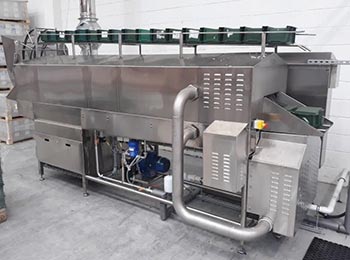
- Automated conveyors or tunnel washers
- Manual pre-rinse stations
- Automated basket and tray washing
- Crate and container washing systems
- Targeted manual sanitation for specialty equipment
This phased approach allows operations teams to improve efficiency gradually while prioritizing the areas with the highest sanitation demands.
Choosing the Right Automated Washing System
Not all automated systems are designed for the same applications. Equipment selection should account for:
- Product type
- Soil load
- Throughput requirements
- Available floor space
- Water and utility availability
- Sanitation standards
- Existing production flow
Food plants should also evaluate long-term serviceability, maintenance accessibility, and system integration capabilities before making a final decision.
Toward the end of the evaluation process, many facilities work with an experienced industrial washing system provider to design solutions customized to their production environment rather than relying on one-size-fits-all equipment.
How Sanicore Systems Supports Food Processing Facilities
Sanicore Systems systems are engineered to help facilities improve sanitation consistency, reduce labor challenges, and support high-throughput production requirements while maintaining food safety standards.
Whether a facility is evaluating its first automation upgrade or expanding an existing sanitation process, Sanicore Systems can help identify the right approach for the application.
Contact Sanicore Systems
If your facility is evaluating manual versus automated washing processes, contact Sanicore Systems to discuss your sanitation goals, production challenges, and equipment requirements with an experienced team.