Key Takeaways
- Automated tote washing systems provide consistent, repeatable cleaning that supports FDA, USDA, and HACCP sanitation programs.
- The right industrial tote washer depends on your tote size, production volume, contamination level, and available floor space.
- Dairy, meat, poultry, frozen food, and ingredient processing facilities each have unique washing and sanitizing requirements.
- Automated washing reduces manual labor, improves worker safety, and helps eliminate sanitation bottlenecks.
- Properly designed bin and tote washing equipment can lower water and chemical consumption while improving cleaning consistency.
- Selecting equipment with scalable capacity and reliable support helps protect uptime and maximize long-term ROI.
Why Tote and Bin Washing Matters More Than Ever
Reusable totes and bins are essential throughout modern food processing. They transport raw ingredients, work-in-process products, finished goods, and waste materials throughout a facility. Unfortunately, they can also become one of the most common sources of cross-contamination if they are not cleaned consistently.
As food manufacturers continue facing tighter regulatory requirements, labor shortages, and increasing production demands, many facilities are replacing manual washing with automated cleaning systems. Properly selected bin and tote washing equipment not only improves sanitation performance but also helps reduce labor costs, minimize downtime, and create a more predictable sanitation process.
For operations managers, sanitation managers, and plant engineers, the goal is simple: achieve reliable, documented cleaning without creating production bottlenecks.
What Is a Tote Washing Machine?
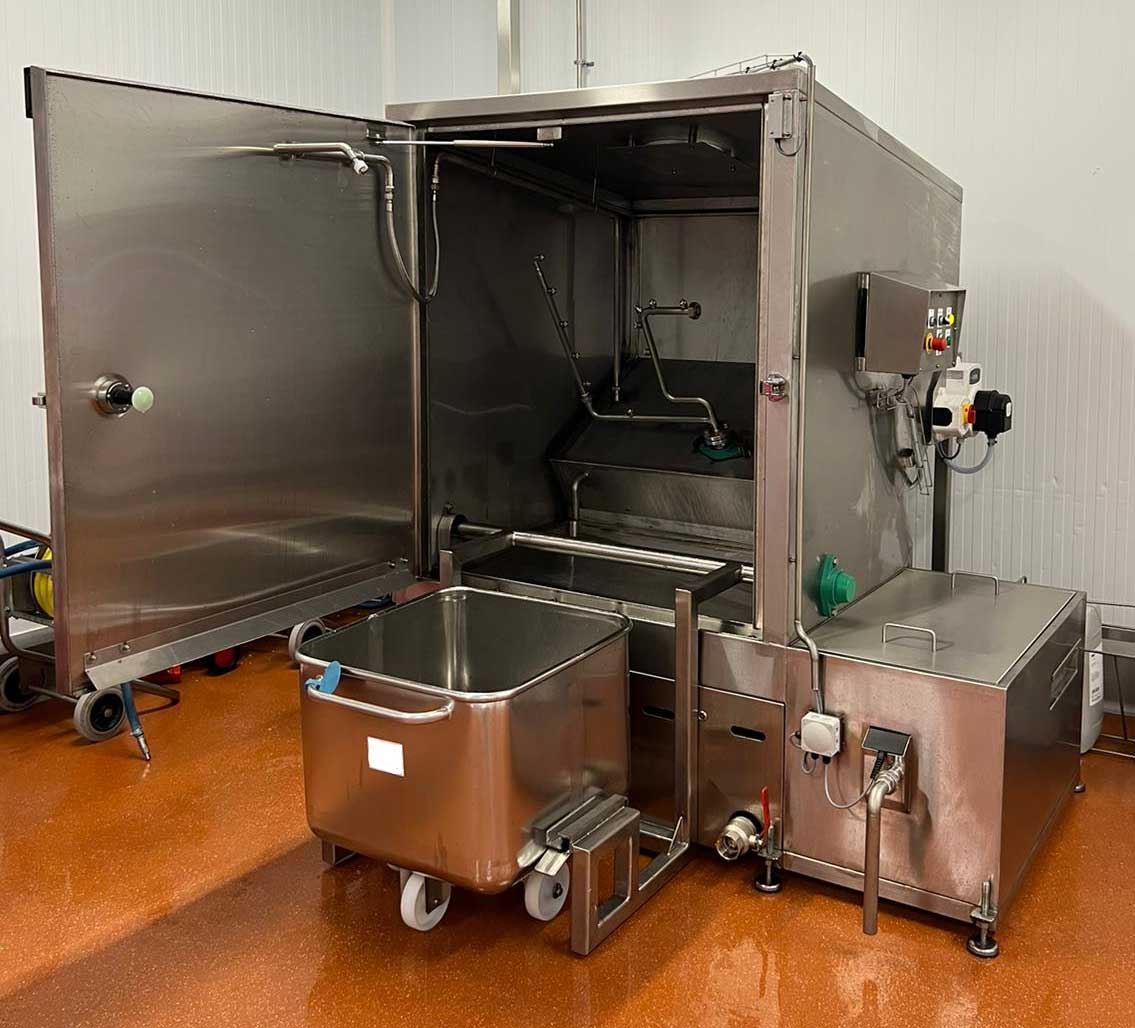
A tote washing machine is an automated cleaning system designed to wash, rinse, and often sanitize reusable containers used throughout food production.
Depending on the application, an industrial tote washer may clean:
- IBC totes
- Plastic ingredient totes
- Meat combo bins
- Dairy totes
- Produce bins
- Ingredient containers
- Reusable storage bins
- Bulk ingredient containers
Most systems use carefully engineered spray patterns, controlled water temperatures, detergent application, and optional sanitizing cycles to ensure every surface is cleaned consistently, including difficult interior corners and recessed areas that are often missed during manual cleaning.
Why Facilities Are Replacing Manual Cleaning
Manual washing can produce acceptable results, but consistency becomes difficult as production volumes increase.
Common challenges include:
- Inconsistent cleaning between operators
- High labor requirements
- Increased ergonomic injuries
- Longer sanitation windows
- Higher water and chemical consumption
- Difficulty documenting cleaning procedures
- Increased risk of contamination
Automated bin and tote washing equipment addresses these issues by delivering repeatable wash cycles that remove operator variability while allowing sanitation teams to focus on higher-value tasks.
Choosing the Right Industrial Tote Washer
Today’s wide-ranging food processing facilities have unique sanitation requirements. The right system should match both the facility’s production needs today, as well as accommodate future growth plans.
When evaluating equipment, consider:
Throughput Requirements
Estimate the number of totes requiring cleaning per hour.
Questions to ask include:
- How many totes move through production each shift?
- Will production volumes increase?
- Are seasonal demand spikes expected?
A system that cannot keep pace with production simply moves the bottleneck from manufacturing to sanitation.
Tote Size and Configuration
Not all containers are the same.
Your washing equipment should accommodate:
- Standard ingredient totes
- Large bulk bins
- Deep containers
- Stackable bins
- IBC totes
- Specialty containers unique to your operation
Custom fixture designs often improve cleaning effectiveness while maximizing throughput.
Contamination Level
Different food products create different cleaning challenges. Facilities may require different wash temperatures, detergents, sanitizing methods, and cycle times, depending upon what they are processing. The following all present differing challenges:
- Raw meat
- Poultry
- Seafood
- Dairy products
- Frozen foods
- Sticky ingredients
- Sugars or syrups
Industrial Tote Washers for Dairy Processing
Dairy processing demands exceptional sanitation standards because residues can quickly support bacterial growth.
An industrial tote washer used in dairy operations should provide:
- High-temperature washing
- Complete removal of milk proteins and fats
- Effective sanitizing cycles
- Easy validation for sanitation documentation
- Hygienic stainless steel construction
Consistent cleaning helps facilities maintain product quality while supporting regulatory compliance and reducing the risk of contamination events.
Tote Washing Equipment for Meat and Poultry Processing
Meat and poultry processors often face some of the industry’s toughest sanitation challenges. Blood, proteins, fats, and organic material require aggressive yet controlled cleaning processes.
An effective tote washing machine for meat processing should deliver:
- High-impact spray coverage
- Reliable removal of heavy soils
- Optional sanitizing stages
- Fast cycle times
- Durable construction for continuous operation
Consistent automated cleaning also helps facilities improve audit readiness while reducing dependence on labor-intensive manual scrubbing.
Washing Solutions for Frozen Food Facilities
Frozen food manufacturers frequently handle reusable bins that move between cold storage, production, and packaging.
These facilities often require washing systems capable of:
- Removing frozen residue
- Cleaning starches and food particles
- Supporting high-volume production
- Preventing contamination between product runs
- Integrating into continuous production schedules
Reliable cleaning becomes especially important when facilities process multiple product lines within the same plant.
Should You Choose a Standalone or Integrated Washing System?
Many growing facilities begin with a standalone industrial tote washer before integrating washing equipment into a larger sanitation workflow.
Integrated systems can include:
- Automatic loading
- Conveyor systems
- Drying stations
- Inspection areas
- Automated unloading
- Data collection for sanitation validation
The best configuration depends on available floor space, production volume, and long-term expansion plans.
How Automated Bin and Tote Washing Equipment Delivers ROI
While equipment costs are an important consideration, many facilities discover the largest savings come from improved operational efficiency.
Potential benefits include:
- Reduced sanitation labor
- Improved cleaning consistency
- Less production downtime
- Lower water usage
- Reduced chemical consumption
- Improved employee safety
- Better documentation for food safety audits
- Increased production throughput
For many food processors, these operational improvements create a compelling long-term business case that extends well beyond labor savings alone.
Finding the Right Tote Washing Solution
Choosing the right tote washing machine involves much more than selecting a machine with sufficient capacity. The best solution fits your specific products, sanitation requirements, facility layout, production schedule, and long-term operational goals.
Sanicore Systems helps food processors evaluate industrial tote washer solutions for a variety of applications including dairy processing, meat processing, poultry operations, frozen foods, ingredient handling, and reusable container sanitation. Our team works with manufacturers to configure bin and tote washing equipment that improves cleaning consistency while supporting productivity and regulatory compliance.
If you’re evaluating automated sanitation equipment or planning to upgrade an existing washing process, contact the Sanicore Systems team to discuss the best solution for your facility.